Riyadh · Relocation · Practical Guide
First 90 days in Riyadh: what to do, what to avoid, and what nobody tells you.
The most common mistake international professionals make when they arrive in Saudi Arabia is not a cultural mistake or a business mistake. It is a sequencing mistake.
They optimise for the wrong things first. They sign a 12-month lease before they know what neighbourhood works for their life. They commit to a school based on reputation rather than fit. They build their week around the compound rather than around the city. Six months later they are locked into arrangements that made sense on paper in London or Toronto and make no sense at all in Riyadh.
I have watched this pattern repeat more times than I can count, across more than 200 families I helped land in this city over two years.
Why the first three months are an information-gathering exercise, not an optimisation exercise
The goal of the first quarter is not to replicate your life from home as quickly as possible. The goal is to understand what your life here actually requires. Those are different projects, and the people who confuse them spend the next twelve months correcting errors they made in a hurry.
Don't try to land the perfect 10 out of 10 in the relocation. Take three months, six months, to test the ground. It's okay.
This is counterintuitive for the kind of person who takes an international role in Saudi Arabia. The people who come here are generally high-agency, optimised for execution. Slowing down in the first quarter feels like losing ground. It is not losing ground. It is gathering the information you need to make good decisions later.

The 12-month lease mistake
The single most useful piece of advice I give people before they arrive: in the first 90 days, try not to sign 12-month contracts of any kind.
Not because Riyadh is uncertain. Because you do not yet know what you need. You do not know which neighbourhood puts you close to the things your family actually does. You do not know whether you want a compound or a city apartment. You do not know what your commute pattern looks like or how your children feel about their school after three months rather than three weeks.
The three other commitments worth deferring
Beyond the lease, three other decisions are worth holding off on through the first quarter.
Car purchases. Riyadh's neighbourhoods are not all equal for driving logistics, and your commute pattern will take 60 days to stabilise. Buy after you know the pattern, not before.
Domestic staffing arrangements. The staffing market here has its own rules and the requirements of your household will become clear only once you are actually living the week. Lock in too early and you optimise for a life you do not end up living.
Social commitments. Riyadh has a dense and active international community and the invitations come quickly. Be selective in the first quarter. Depth of a few relationships is worth more than breadth of many, and the social landscape will make more sense once you know where you are spending your time.
Why less is more in the first quarter
The families I have seen land well in Saudi Arabia share one characteristic. They resist the instinct to import their previous configuration wholesale. The five-bedroom villa because that is what they had in Dubai. The compound with every amenity because that is what the package allows.
They arrive with a lighter footprint, observe what the city actually asks of them, and build from there. Less is more. This is a great way to let go of the previous chapter and make room for change.
Don't think that the way your life looks at home will be the best setup for your family to thrive here. Actually, less is more.
What to do instead: the short-term rental strategy
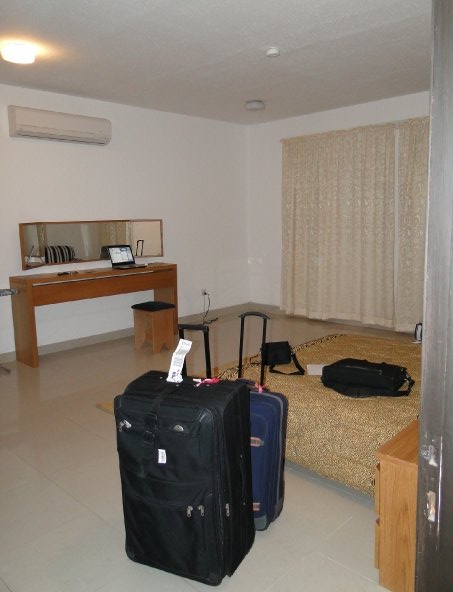
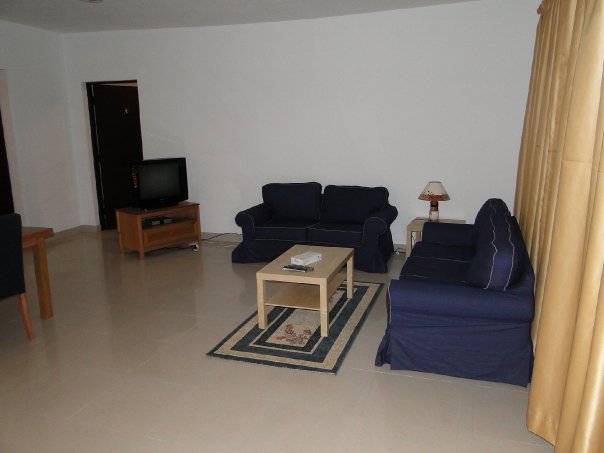
Arrive with a short-term rental. A serviced apartment, a hotel apartment, a furnished three-month lease. Give yourself the first quarter to understand the city, understand your week, understand what your family actually needs to function well here.
Visit the compounds and neighbourhoods on foot, not just on a tour. Spend time in the city outside the compound. Drive the routes you will actually drive. Find one or two people who have been here two or three years and ask them what they know now that they did not know when they arrived.
What the families who land well have in common
Beyond the tactical decisions, the families who thrive in Riyadh past year one have almost always done one thing in year one that the families who leave have not. They found their people.
Not an entire social network. One or two families with whom the connection was genuine rather than proximity-based. The compound social life creates a lot of proximity. Proximity is not community. Community is what happens when two families discover they actually want to spend time together, not just that they live in the same building.
How to use the first 90 days to set up the next three years
The investment of the first quarter is not in property or in contracts. It is in orientation. Understanding the city at street level. Building the first one or two real relationships. Learning the rhythms of a Riyadh week. Identifying the two or three people in your professional network here whose judgment you trust and who are willing to give you an honest read on things.
From that foundation, everything else is much easier. The lease decision is obvious because you have lived enough of the city to know what you need. The school decision is clearer because you have talked to parents who have been through it. The social life builds naturally because the first relationships have created the first introductions.
The 12-month lease will still be there in month four. The difference is that in month four you will know what you are signing up for.
If you are a family or individual preparing to relocate to Riyadh and want to think through the landing with someone who has done this more than 200 times, I am happy to talk. And read this on the social side of landing in Riyadh, because the property decision and the community decision are connected in ways most people do not realise until month six.
LISTEN · FROM INSIDE SAUDI, PART 1
Watch on YouTube (timestamped) →