Saudi Arabia · Expat Life · Reality
What living in Saudi Arabia is actually like: misconceptions vs reality.
I was 25 years old, sitting in Singapore in the middle of my MBA, and I had just accepted an internship in Riyadh.
I went on Google to research what life in Saudi Arabia looked like. I got very concerned. Everything I read pointed in the same direction. This was not a place aligned with the life I was living. Not a place for someone like me. The subtext was clear: wrong move.
I took the internship anyway. And the first week did nothing to calm me down.
What Google said in 2009 and why it was wrong
I had a formula for exploring new cities. Find the Grand Bazaar equivalent, the old city, the places where people gathered. I had done it in a dozen countries by then. I arrived in Riyadh in June 2009 and tried to run the same playbook.
It failed completely.
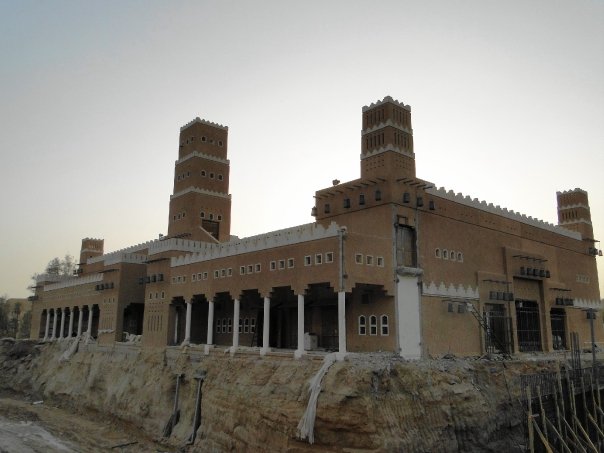
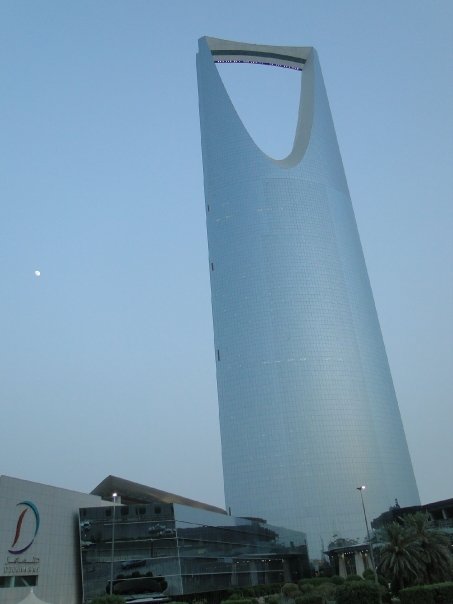
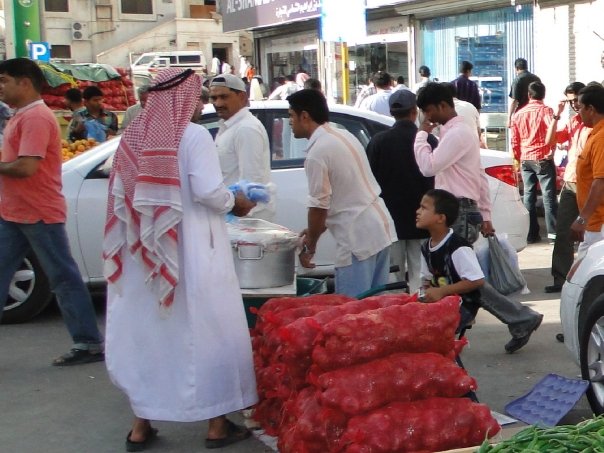
The old city at Diriyah was boarded up and under construction. The Grand Bazaar equivalent turned out to be Batha on a Friday, which was nothing like what I had pictured. And the Kingdom Tower mall had a family-only policy at the entrance at the time, which I did not understand and did not expect.
I took a lot of photos. I sent them back to Mexico and to my MBA classmates in Singapore. People thought I needed rescuing.
The camel market, the old city, and the mall
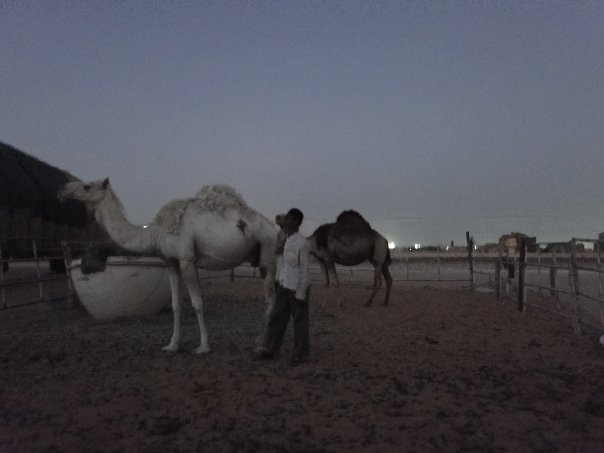
Someone had told me that if I drove east, there was a camel market. There was. Ten thousand camels with their herders, no signage, no tourists. I had been expecting something closer to a Disney attraction. What I found was just camels, doing what camels do, completely indifferent to my camera.
I documented all of it. Posted it on Facebook. The comments from home were exactly what you would expect: concern, disbelief, and a number of questions about whether I was safe. I was very safe. The camels were entirely peaceful.
Within my first week I was already experiencing a Saudi Arabia very different from the one that existed on the internet.
What changed when one introduction arrived
A friend of mine in Mexico, Rodolfo, had met a Saudi guy named Sultan at an English course in the United States a few years earlier. When Rodolfo saw my photos online, he sent Sultan a message telling him I was in Riyadh.
The reply came back: "Please furnish him with my mobile. I will be honoured to get in touch with him, as he is a friend of yours."
Sultan took me for lunch. Three weeks later he invited me to an istiraha, about an hour outside the city. Around 25 Saudi men. Dates, Arabic coffee, the Isha prayer, then dinner. No alcohol. We talked until 3am.
I had gone looking for the Saudi Arabia that Google had described. I found something that had no Wikipedia entry.
3am in Riyadh with no alcohol, completely absorbed in conversation, having the best night I had had in two years of travelling. 3am in Singapore looked very different. The comparison was not even close.
What the internet gets structurally wrong about Saudi Arabia
The information available about Saudi Arabia online has always been produced mostly by people who were not there, or who were there briefly and filtered what they saw through a lens they brought with them. That is not a criticism. It is a structural problem.
When the experience of a place is not well-documented by the people actually living it, the vacuum gets filled by other narratives. Some of those narratives are accurate in specific ways. Most are incomplete in ways that matter commercially and personally.
What I experienced that summer was not exceptional. It was ordinary Saudi life. The hospitality, the 3am conversations, the istiraha, the warmth extended to a 25-year-old Mexican kid who showed up with a camera and very little Arabic. That was not a curated experience designed for foreigners. That was just what happened when I stopped trying to find the Saudi Arabia I had read about and started paying attention to the one that was actually there.
What the gap between perception and reality actually costs
The Diriyah that was boarded up in 2009 is now a UNESCO World Heritage Site and one of the most visited destinations in the region. The single-male entrance policy at the Kingdom Tower mall no longer exists. The country on Google has not kept pace with the country on the ground.
The people making decisions about whether to come, whether to invest, whether to build something here, are still largely working from information that is either wrong, outdated, or produced by people who were never on the ground. That gap has consequences. Companies underprice the opportunity. Families overestimate the difficulty. Professionals talk themselves out of moves that would have changed their careers.
What Riyadh looks like now versus then
I returned for LEAP in February 2024 with my father, who had visited me when I lived here the first time. We drove from the airport into the city. Neither of us recognised it. He had known the Riyadh of 2010. What we drove through in 2024 was something else entirely.
The Princess Nura bint Abdulrahman University, near which I once counted 200 construction cranes, was complete. The roads were different. The skyline was different. The energy in the city was different. My Saudi friends, who when I had last seen them would take things a bit easier, were now full steam ahead. Meetings, commitments, boards, projects. They were cooking.
The gap between what Google tells you about Saudi Arabia and what Saudi Arabia actually is has not closed. If anything, it has widened, because the pace of change here is faster than any editorial process can track.
If you are making a decision about Saudi Arabia based on what you have read rather than what you have experienced, you are working from an incomplete map. The territory has moved on. Read this next on the one thing that actually determines whether expats thrive here.
LISTEN · FROM INSIDE SAUDI, PART 1
Watch on YouTube (timestamped) →